
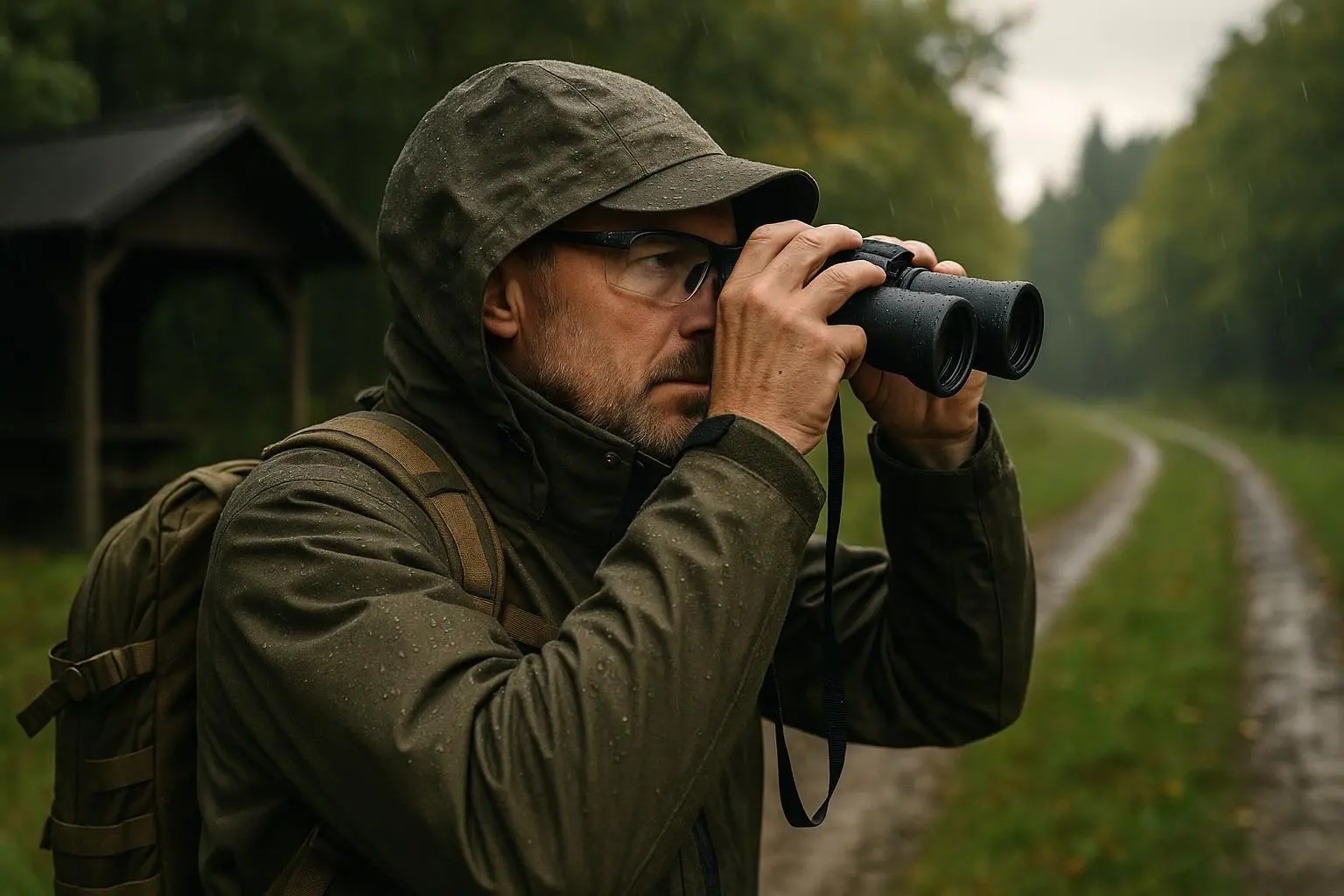
At the ridge, a distant animal steps from shadow into a broken strip of late light. You raise the binoculars, but the image looks soft, the view narrow, and the eyecups force you to shift your head before your eyes settle. That moment reveals the real buying problem: specifications describe an optic, while field conditions show whether it works for you. A sound choice balances clarity, field of view and eye relief, then verifies those qualities before the trip.
Clarity is more than a sharp center
Clarity is not simply on or off. A clear image should reveal useful edges and patterns without constant refocusing. Look beyond the center: if detail becomes noticeably smeared toward the edges, the optic may suit someone who keeps a subject centered but frustrate anyone scanning broad terrain.
Contrast matters as much as apparent sharpness. In flat light, strong contrast can separate a dark shape from brush more effectively than a brighter-looking view with washed-out tones. Color rendition, glare control and stray light also affect eye fatigue.
Do not judge clarity from a showroom target alone. Read fine detail at several distances, examine a shaded subject against a bright background and compare the edges of the view. An image that remains comfortable during a long observation is often more valuable than a dramatic first impression.
Field of view changes how you search
Field of view determines how much landscape you see at once. A broad view can help you locate a moving animal, follow a bird through cover or scan a timber edge without repeatedly lifting and lowering the optic. A narrower view may feel more focused for distant, stationary observation, but it demands more deliberate aiming with your eyes and hands.
The tradeoff depends on how you observe. If your trips involve still-hunting through dense vegetation or watching a large area, search speed deserves serious weight. If you study a known slope for long periods, a slightly narrower view may be acceptable when the image feels steadier and more comfortable.
Choose a distant reference point, lower the optic and bring it back up without searching for the subject. Repeat from several angles. If you routinely lose the reference, the field of view, handling or balance may not match your technique.
Eye relief has to match your face and eyewear
Eye relief is the usable distance between your eye and the eyepiece. It matters especially for people who wear glasses or sunglasses, or whose viewing position changes during a cold-weather outing. Too little usable relief can leave dark crescents around the image or make the view disappear when your head moves slightly.
Adjustable eyecups help, but they do not replace testing. Wear the glasses you actually use outdoors. Set the eyecups as you would in the field, bring the binoculars into position and move your head gently from side to side. The image should remain complete without pressing the eyepieces into your lenses.
People without glasses should test the opposite arrangement. An optic that feels natural with the eyecups extended may become awkward when they are folded down. Eye relief is a fit issue, not a number to evaluate in isolation.
Low-light viewing exposes the compromises
The last minutes before darkness are hard on both optical systems and observers. Pupils, weather, background contrast, lens condition and mounting stability all influence what you can see. A larger front lens may collect more light, but it can also add weight and bulk. A compact model may be easier to carry and hold steady, offsetting some theoretical advantage in real use.
For low-light viewing, examine a shaded area rather than a brightly lit object. Compare how easily you can separate branches, fur or rock from the background, and check for glare when a low sun sits just outside the view. Clean lenses matter: fingerprints and fine dust become more distracting as contrast falls.
Night vision is a separate decision, not simply a stronger version of ordinary glass. It brings different controls, handling habits and legal considerations, particularly around wildlife or when used with other equipment. Requirements vary by location and purpose, so check current official regulations before a trip.
Verify the optic before committing
Published specifications can narrow the field, but they cannot confirm personal fit. Test under conditions resembling the intended use, with the accessories you will actually carry. Borrowing or trying an optic for a meaningful period is more informative than a brief glance across a shop.
Use this short check:
– View fine detail in bright light, shade and fading light.
– Scan from center to edge for distortion, blur or distracting glare.
– Test the full field of view while locating several fixed targets.
– Wear normal glasses or sunglasses and adjust the eyecups.
– Refocus from near to far, then check whether both eyes remain comfortable.
– Hold the optic for several minutes and note weight, balance and hand fatigue.
If two choices seem close, repeat the test after your eyes have had time to adapt. Discomfort, eye strain or repeated refocusing are meaningful evidence, even when the image initially looks impressive.
Match the choice to the trip
Start with your actual observation pattern. A mobile hunter scanning irregular cover may prioritize a forgiving field of view and low weight. Someone watching a distant basin for extended periods may value edge performance, stable handling and a relaxed eyepiece position. A glasses wearer may need to reject an otherwise appealing option if the usable view is too sensitive to head position.
Common mistakes include chasing the largest specification, judging only in bright indoor light, ignoring edge clarity and assuming a familiar brand will fit every face. Another is buying for a rare, demanding scenario while carrying the resulting bulk on every ordinary outing.
The sensible choice is the optic you can hold steadily, position quickly and view comfortably in the light you actually expect. Verify those traits before the trip, and the decision becomes less about finding a universal best model than removing the compromises that would bother you in the field.